
Lucy Varnava: “Cultural awareness is your ticket into an entirely different circle”
Lucy Varnava is a British cultural and language mentor for the Premier League football club,an expert in royal etiquette and protocol, a media coach, and a mentor for negotiation dialogues. We spoke about how culture and etiquette help athletes and public figures unlock their potential, and which skills will be indispensable in the coming years.

You work on developing cultural confidence both with professional footballers at and with a wider audience. Could you share specific situations where skillfully applied elements of royal etiquette or art history opened new opportunities for an athlete or changed their self-perception?
There was a time when I worked with a young player who was about to attend a charity reception with members of the royal family. He was worried he wouldn’t “fit in” with the atmosphere. We went over not only the greeting protocol and dress code but also several art history stories related to the theme of the event. As a result, he not only communicated confidently but also impressed by sharing knowledge about some painting, which immediately caught the attention of both journalists and guests. For him, this was a turning point — he saw that cultural awareness can be more than just a “polite addition”; it can be a ticket into an entirely different circle. After all, the essence of social conversation is to reveal yourself and find “common ground” in any company within a short time.
You actively teach public figures how to work with the media — in an era when the personal and professional blend together on social media, how does the approach to etiquette change? What “media mistakes” do public figures most often make, and how do you turn them into growth opportunities?
Today, the line between the personal and the professional is blurred, and this demands a new kind of cultural flexibility from public figures. The mistakes I most often see are excessive spontaneity without a strategic filter and copying someone else’s communication style. In my work, we learn to build a unique “tone of voice” on social media so that even in informal shots, status, inner confidence, and a sense of measure are conveyed. I always say: in media etiquette, there are no small details, because every word and gesture becomes part of your public image. But this doesn’t mean you need to create an illusion. Just like in clothing style, the key is balance — a harmony between the professional and the personal, where both aspects highlight the best sides of your personality.
As a media mentor and negotiation dialogue specialist, what basic skills do you think are underestimated when preparing for negotiations, especially if they are led by someone already successful in sports or culture?
Even highly accomplished people often underestimate the skill of subtle silence — the ability to hold a pause and give the other person space to open up. Another crucial point is the ability to read cultural context: knowing which symbols, words, and images will be perceived by your counterpart as a sign of respect. This is especially relevant when it comes to negotiations between representatives of sports, the arts, and business — the cultural code can become just as important as the numbers and terms of the contract. This is particularly true today, when multiculturalism has become part of everyday life.
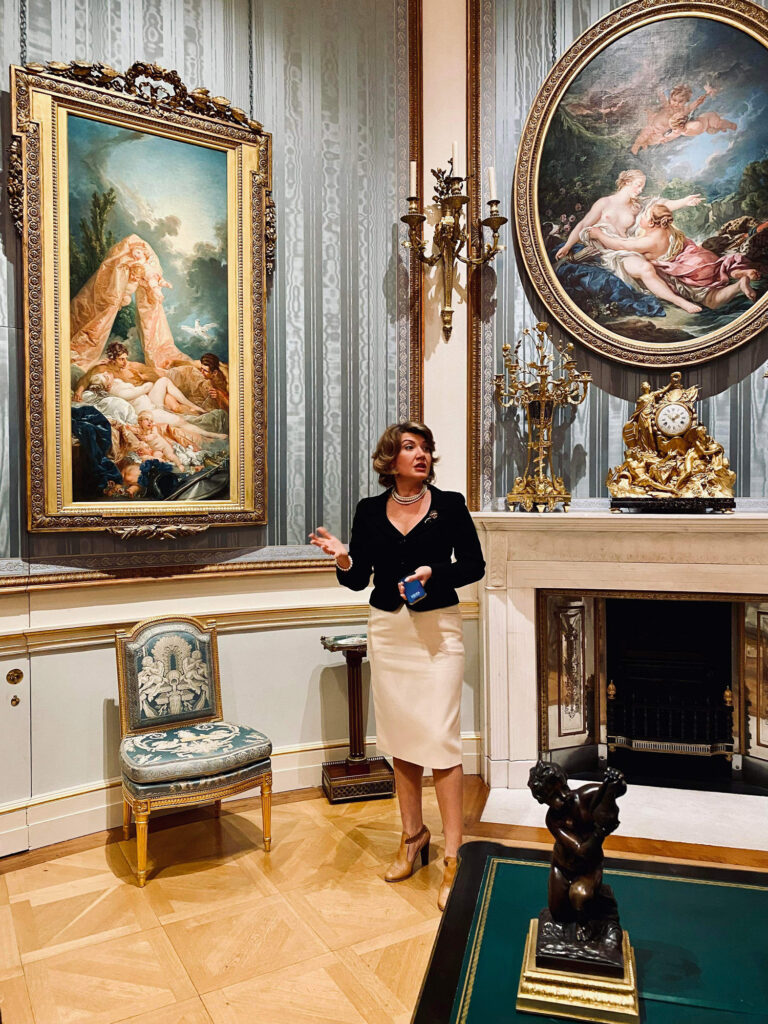
In your publications, you’ve mentioned that your mission is to make life brighter and happier through culture and manners. How do you integrate art history or elements of etiquette into the daily routines of football teams?
With footballers, we integrate culture into small but consistent rituals: analyzing paintings as a warm-up for the imagination and a way to shift focus during stressful moments, or discussing historical events related to the city where they play. For businesspeople, art often becomes a source of new ideas hidden in seemingly subtle meanings — color, emotion, form. You might be surprised by how art can act as a guide for the direction of development. Etiquette is woven into daily life almost invisibly — through greeting protocols, the ability to express gratitude, and to receive it. These “drops of culture” create a sense of self-worth, give teams an extra feeling of unity, and help individuals feel part of a refined, culturally sophisticated circle.
Given the trends you observe in sports, media, and professional etiquette, what challenges will cultural education face in the next 5–10 years? And what competencies should we develop now to be prepared?
In 5–10 years, the main challenge will not be access to information, but its cultural filtering and conscious application. The world will continue to accelerate, and those who can connect the global context with personal authenticity will be most valued. It’s already important to develop skills such as:
- Cultural navigation — the ability to navigate different traditions and codes, which involves studying both etiquette and the cultures of various countries and peoples.
- Media self-presentation — an essential skill for elite athletes, business leaders, and media personalities. Even basic knowledge of body positioning in front of a camera, gestures, and emotional delivery can either draw people in or push them away.
- Emotional intelligence in negotiations — this is the foundation of both you and your brand. It’s crucial to understand the emotion you’re projecting and how others perceive you. I should note that emotional intelligence is particularly well-developed in South America, especially among Brazilians. We have much to learn from them — for example, how to smile sincerely with the whole body.
I’m convinced that these competencies will help us preserve human warmth in a world where more and more communication is moving into the digital space.