Kamila Zhusupova: creativity brings content to life, while analytics turns it into results
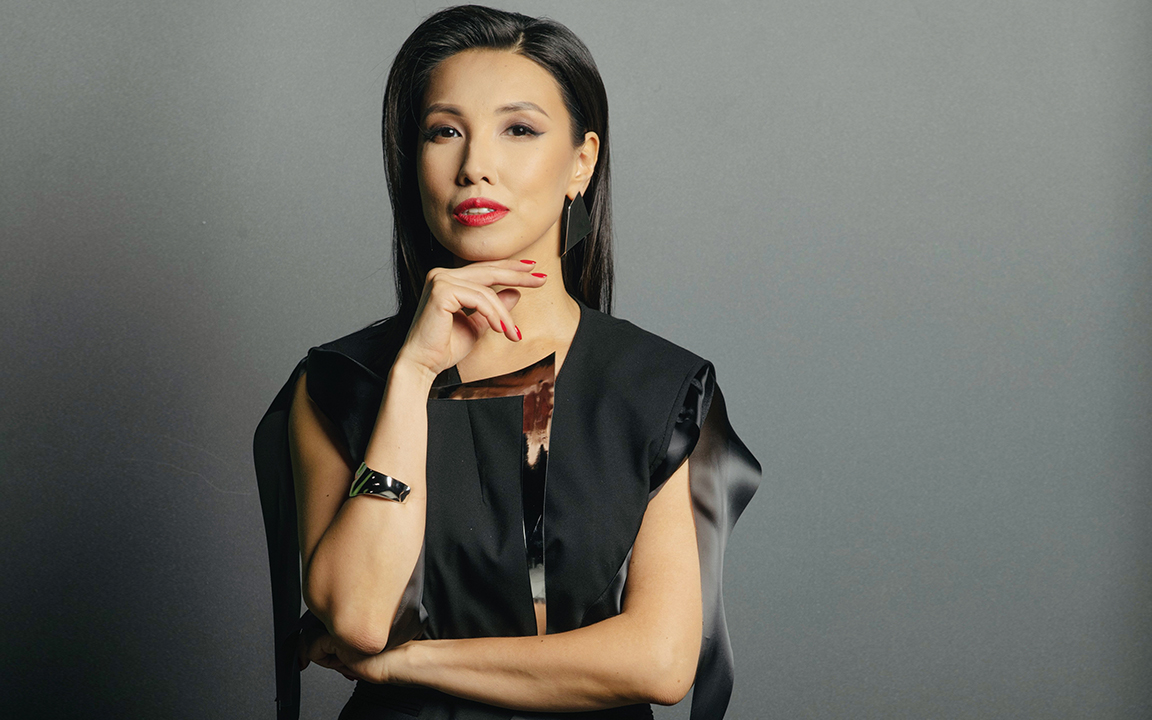
From TV presenter to Head of Digital at a major TV channel — Kamila Zhusupova’s path shows how fast the media landscape is changing and which qualities help to stay at its center. We talked with Kamila about the turning points of her career, the biggest challenges, critical thinking in the era of social media, and how she envisions the future of media.

You started as a TV presenter and today you lead the digital division of a major TV channel. Which moments on this path became defining for you?
The defining moments were those when I realized that old methods no longer worked. When I began, television was still the main source of information, and the audience’s trust in the screen was almost unconditional. Today, however, we live in an era where news and impressions come first to the smartphone. It was important not to resist these changes but to embrace them.
Ten years ago, it seemed that social networks could never replace television news. But now people usually learn breaking news from Telegram channels or short TikTok videos. To keep the connection with the audience, it was necessary to become a strategist and work with content across all platforms. This experience taught me to look at media not as a separate broadcast, but as a whole ecosystem.
What professional challenges have been the hardest for you, and what have they taught you?
The hardest thing has always been working in times of crisis, when speed, responsibility, and uncertainty all press on you at once. In such moments, it is crucial not to give in to pressure and not to voice unverified facts, because one word on live television or online can change people’s lives. That’s why I learned not only speed but also the ability to pause: it is better to speak half a minute later, but with accuracy.
More broadly, crises exist in every field. Remember how during the pandemic companies all over the world had to rebuild processes in just a few weeks. That was also a crisis — and it taught us flexibility. My main conclusion: in a crisis, the winner is not the one with the most resources, but the one who can keep clarity and make decisions without panic.
In a world of endless content flow, how do you personally keep clarity and the ability to critically analyze information?
I try never to be a passive consumer. Even if it’s just a short news item in a feed or a TikTok video, I always ask myself: who is the source, what is their motivation, is there confirmation from other channels? I often repeat to my audience: don’t trust just one source, especially if the information is presented emotionally. Compare at least three different sources, look where the facts are, and where only emotions.
Today, news is often reduced to a catchy headline. A person reads one phrase and already makes conclusions. But the truth is in the details. That’s why I always say: read the text, check who the author is, and ask yourself: “Who benefits from me seeing or reading this right now?”
I am convinced that media literacy and critical thinking are as basic as the ability to read and write. They allow us not only to filter information for ourselves but also to pass these tools on to others.

How can creativity and an analytical approach be combined in media today?
I am sure that this is not “either-or,” but the only formula for success — “both-and.” Creativity generates the idea that grabs attention. But without analytics, it’s impossible to understand whom it will affect and what result it will bring.
You can shoot a beautiful video for social networks, but if you don’t consider the audience’s interests and the platform’s algorithms, it will remain “in the drawer.” But if you add analytics, you get content that not only looks good but also works.
Take the film industry. Marvel has creativity: superheroes, special effects, dramatic stories. But there is also analytics: they study which characters are most liked, which plots keep viewers engaged, and when is the best time to release a premiere. The result is a product that gathers millions. In media, it should be the same: creativity brings it to life, and analytics turns it into results.
What projects are you working on now, and what media trends do you consider key in the coming years?
Right now, I combine several directions. This is work with news and broadcasting, hosting podcasts, and creating digital projects. At the same time, I work as a media consultant — building communication, shaping information strategies, working with public speaking. Several social projects are also in development.
If we talk about the future, I am sure that the key trend will be personalization and work with communities. People are tired of universal content and want to see material that reflects their specific needs. It can be news in their native language, educational projects for teenagers, or specialized podcasts. Social network algorithms are already moving in this direction — selecting content for each person. The media of the future must be able to work not only with the masses but also with small communities where there is trust and loyalty.