

Lidiya Aliyeva-Shestak. Soloha Baku: Ukrainian Flavor In The Heart Of Baku
Lidiya Aliyeva-Shestak is not only a successful businesswoman but also a true ambassador of Ukrainian culture in Azerbaijan. Her restaurant Soloha Baku has become a hallmark of Ukrainian cuisine in Baku, blending the culinary traditions of both cultures. Lidiya also heads the Union of Ukrainian Women in Azerbaijan and serves as the Representative Director of Business Woman in Azerbaijan, actively promoting women’s entrepreneurship and cultural diplomacy. In this interview, Lidiya shares her business journey, the challenges she has overcome, and her plans for the future.
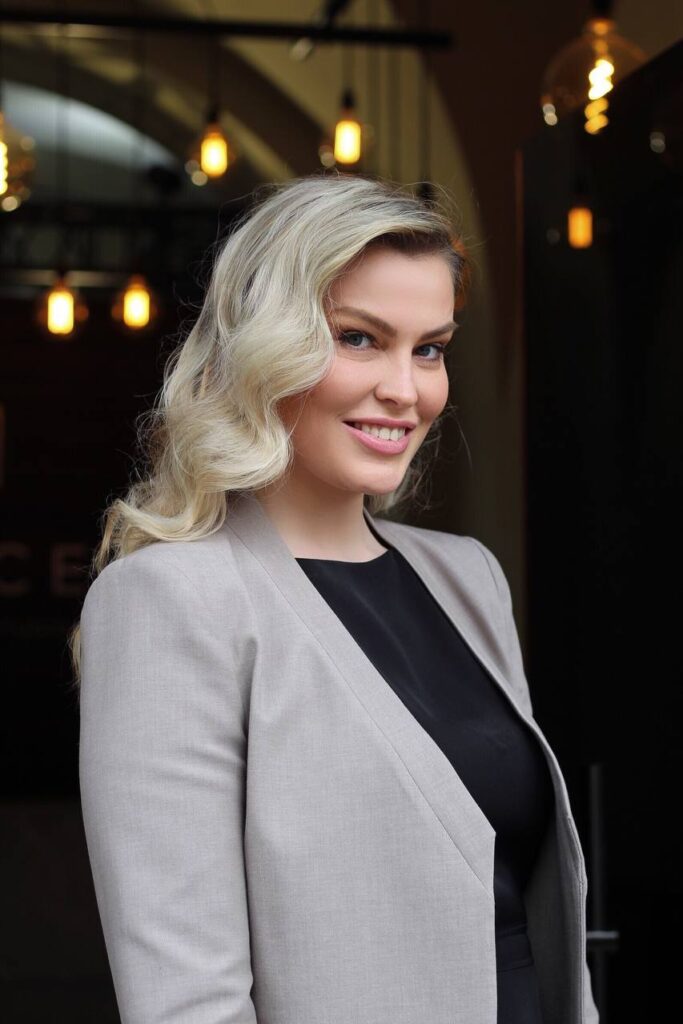
Soloha Baku has become a popular place for people to discover Ukrainian cuisine in Baku. What goals did you set for yourself when opening the restaurant, and how did you achieve such success?
Soloha Baku became a popular destination for those seeking to experience Ukrainian cuisine. When I opened the restaurant in Baku, I never imagined it would operate for such a long time, as I opened it back in 2007.
On May 13, our official operations began. That was our first working day, and I still remember it in great detail. In fact, my business journey started quite interestingly because I came to Baku as an expat, working for a company. When my contract ended, I enjoyed living here so much that I decided to stay and start my own business. That’s how Soloha was born, and we’ve now been working for 17 years.
Why a restaurant? Because I’ve loved cooking since childhood and always invited guests over. Cooking has always been a passion of mine — I was a gourmet even as a kid, searching for the best ingredients. This love for food and culinary arts somehow expressed itself in the restaurant business. Of course, it wasn’t easy, but all of our success is based on hard work and dedication.
The restaurant business is very challenging. We’ve gone through several crises: the 2008 crisis, the 2014 crisis, the pandemic (during which we barely survived), the Karabakh war, and now the war in Ukraine. All these factors significantly impacted our business, but despite everything, we now have two restaurants. One of them is Brent, where people really love our Ukrainian cuisine.
We’ve made so much borscht over the years that one day I’ll even calculate how many tons we’ve cooked! I believe success is a combination of quality and hard work, and thanks to that, we’ve remained popular in Baku. Every resident knows our restaurant, and it’s not just famous in Baku — many visitors also know about it. This is our brand.
As the head of the Union of Ukrainian Women in Azerbaijan, you actively promote women’s entrepreneurship. What challenges and achievements have you encountered on this path, and what stands out the most?
Yes, the Union of Ukrainian Women in Azerbaijan is not entirely about entrepreneurship; it is more of a public organization dealing with cultural, humanitarian, and charitable issues. We were established at the beginning of the war in Ukraine, and during this time we’ve provided significant assistance. Our main focus, however, is cultural diplomacy.
Through cultural diplomacy, we promote issues concerning Ukraine here in Azerbaijan and raise funds. Over this period, we’ve held more than 100 different events and festivals. For example, our largest festival is Vesnyanka, which brings together the cultures of Ukraine and Azerbaijan. We talk not only about Ukrainian traditions, such as how we celebrate Easter, but also about Nowruz, which is celebrated here. This cultural exchange is very important for Ukrainians living here and for Azerbaijanis interested in learning about our traditions.
As for challenges, they relate to the specifics of how NGOs operate here. It’s not always easy to obtain certain grants, but we have an excellent team, including male mentors. I’m probably fortunate with my environment, which is why we’ve achieved so much.
Over 100 events — that’s cultural diplomacy in action. We publish a lot of information and support Ukraine through our work. This is especially relevant today.
You are also the Representative Director of Business Woman in Azerbaijan. How do you see the development of women’s business in the country, and how does your role contribute to this?
In fact, my mission is not only to support women’s business in Azerbaijan, but also to closely observe its development. Azerbaijan is quite a traditional country, where women are often assigned specific roles and are not always seen as independent business leaders. But the situation is changing.
I even wrote an article for our magazine about how women’s entrepreneurship is growing in Azerbaijan. Over the years I’ve been here, it has increased several times. There are many programs offering grants for women entrepreneurs, preferential loans, and a strong focus on this area.
My role as a mentor is to help women understand whether they want to go into business and how to build the right strategy. I share my experience, explaining how I developed and the challenges I faced. My example — being a woman in a foreign country who managed to open a successful restaurant — inspires others.
I’ve been working for 17 years, and this motivates other women. It may not sound modest, but it’s true.

In your interviews, you mentioned the difficulties of starting a business without a business plan. What lessons have you learned from this experience, and what advice would you give to beginners?
I didn’t have a clear, professional business plan. I started the project “on a whim,” as they say. The biggest challenge was the lack of experience — not just in the restaurant business, but in business in general.
I learned many aspects along the way: finances, investments, and marketing. Every year brought new experiences, and I realized that improvements were needed either in marketing or equipment. Perhaps if I had had experience from the beginning, I would have achieved success faster.
Now, with so much competition, I insist that people study the market, write a business plan, understand their risks, and know how they’re going to move forward. As a mentor, I try to help others avoid the mistakes I made. Nowadays, you can’t just “wing it” without careful preparation. You need to thoroughly study the market and competitors.
How do you balance running a business with your projects in PR and women’s entrepreneurship? What are your immediate goals and plans?
My business is now running on its own tracks, so I focus more on the new restaurant we opened seven months ago. It requires more time than the other restaurant, which has been operating for 17 years.
I’m very good at time management, so I currently have four projects in completely different fields: the restaurant, public activities, consulting, and organizing business and PR meetings. We organize conferences, online and offline events, and round tables.
There’s another project I’m working on that I haven’t revealed yet, but it’s also related to organization. I work both in business and public activities. Regarding women’s entrepreneurship, I have ideas for conferences, possibly regional ones.
The next major project is COP-29, where we’ll be presenting Ukrainian receptions at a high level. The key is time management and responsibility. Without these, it’s impossible to be a successful entrepreneur.